
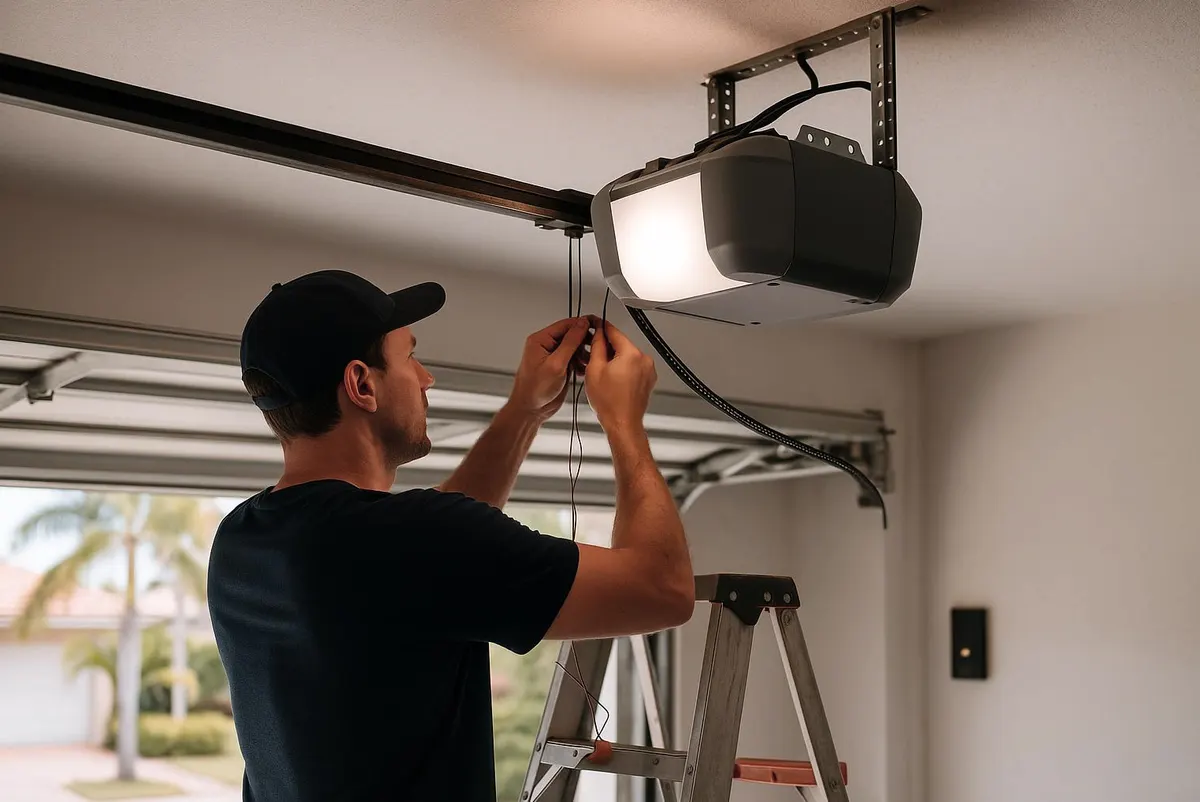
A Typical Service Call
The call usually starts the same way: a loud bang from the garage overnight, then a door that won't budge the next morning, or an opener that strains and reverses without lifting the door at all. When a technician pulls into the driveway and opens the garage, the torsion spring above the door is often split clean in two, with a visible gap where it used to be coiled tight. Near the coast, that spring is frequently showing rust along the coils even before it broke, a result of salt air and humidity working on the metal faster than it would further inland. That combination of a sudden failure and visible corrosion is what prompts most spring replacement calls in this area.
What Actually Drives the Price
Spring replacement costs vary more than homeowners expect, and the final number depends on several factors that a technician checks before quoting anything.
- Spring type: Torsion springs mounted above the door are more common on newer installations and cost more to replace than extension springs, which run along the horizontal tracks.
- Single vs. dual spring systems: Many two-car garage doors use two torsion springs. If one breaks, the other is usually close behind, and replacing both at once is standard practice to avoid a second service call within months.
- Spring size and cycle rating: Springs are rated for a certain number of open-close cycles, typically 10,000 or 20,000 plus. Higher-cycle springs cost more upfront but last longer, which matters here given how often doors get opened and closed to deal with afternoon storms rolling in.
- Door weight and size: Heavier doors, including insulated or wind-load rated doors built for storm codes, require higher-tension springs that cost more than the springs on a lightweight single-layer door.
- Hardware condition: If the cables, drums, or bearings show wear or rust when the spring is removed, replacing them at the same time adds to the bill but prevents another breakdown soon after.
- Accessibility and labor time: Garages with limited clearance, high ceilings, or older torsion systems that take longer to disassemble can add labor time.
- Timing: Same-day or after-hours emergency service typically carries a premium over a scheduled daytime appointment.
National Cost Ranges
These are general ranges reported across the industry, not local pricing, since the final number always depends on the specifics of the door and spring system. Homeowners should expect:
- Single torsion spring replacement: roughly $150 to $350, including parts and labor.
- Dual torsion spring replacement: roughly $250 to $450 for both springs.
- Extension spring replacement (pair): roughly $100 to $250.
- High-cycle or heavy-duty springs: add roughly $50 to $100 on top of standard pricing.
- Emergency or same-day service: add roughly $50 to $100 depending on timing.
These ranges can shift based on local labor rates, the brand of spring used, and whether additional hardware needs replacing. A technician who inspects the door in person is the only reliable source for an actual number.
What a Fair Quote Should Include
A written quote, given before any work begins, should spell out more than just a total dollar figure. Look for:
- Itemized parts and labor so it's clear what you're paying for, not a single lump sum.
- Spring specifications including wire size, length, and cycle rating, especially important if the door is wind-load rated for storm codes.
- Inspection notes on cables, rollers, drums, and bearings, since these parts wear alongside springs and are easy to check while the system is already open.
- Warranty terms covering both the spring itself and the labor to install it.
- Any trip or service call fee disclosed upfront rather than added as a surprise.
If a quote only lists a single number with no breakdown, it's worth asking what's actually included before agreeing to the work.
Why Coastal Conditions Matter Here
Springs near Panacea, Shell Point, and other coastal stretches tend to show corrosion sooner than springs in drier inland areas. Salt-laden air accelerates rust on coil surfaces, which weakens the metal and shortens the spring's working life even if the cycle count hasn't been reached. Humidity also causes garage door panels and tracks to swell slightly, which can put uneven stress on a spring that's already working at its tension limit. Regular tune-up and maintenance visits help catch early rust or alignment issues before they lead to a sudden break, which is often cheaper than waiting for a full failure during storm season when a working garage door matters most.
When to Call Precision Garage Door of Panacea
If a spring has already snapped, the door is stuck in place, or you're hearing grinding or popping sounds when the opener runs, it's time to call rather than attempt a fix. Springs are under heavy tension and not a safe DIY repair. Precision Garage Door of Panacea handles Garage Door Spring Repair with the correct cycle-rated springs for the door and climate, and offers Garage Door Tune-Up & Maintenance visits to catch rust and wear before they turn into a middle-of-the-night breakdown. A technician will inspect the full spring and cable system, give a written quote before starting, and get the door back to safe, reliable operation.
If your garage door spring has broken or is showing signs of rust and strain, call Precision Garage Door of Panacea today. We serve Panacea, Crawfordville, Sopchoppy, St. Marks, Wakulla Springs, Medart, Ochlockonee Bay, and Shell Point with prompt, honest repair work.